

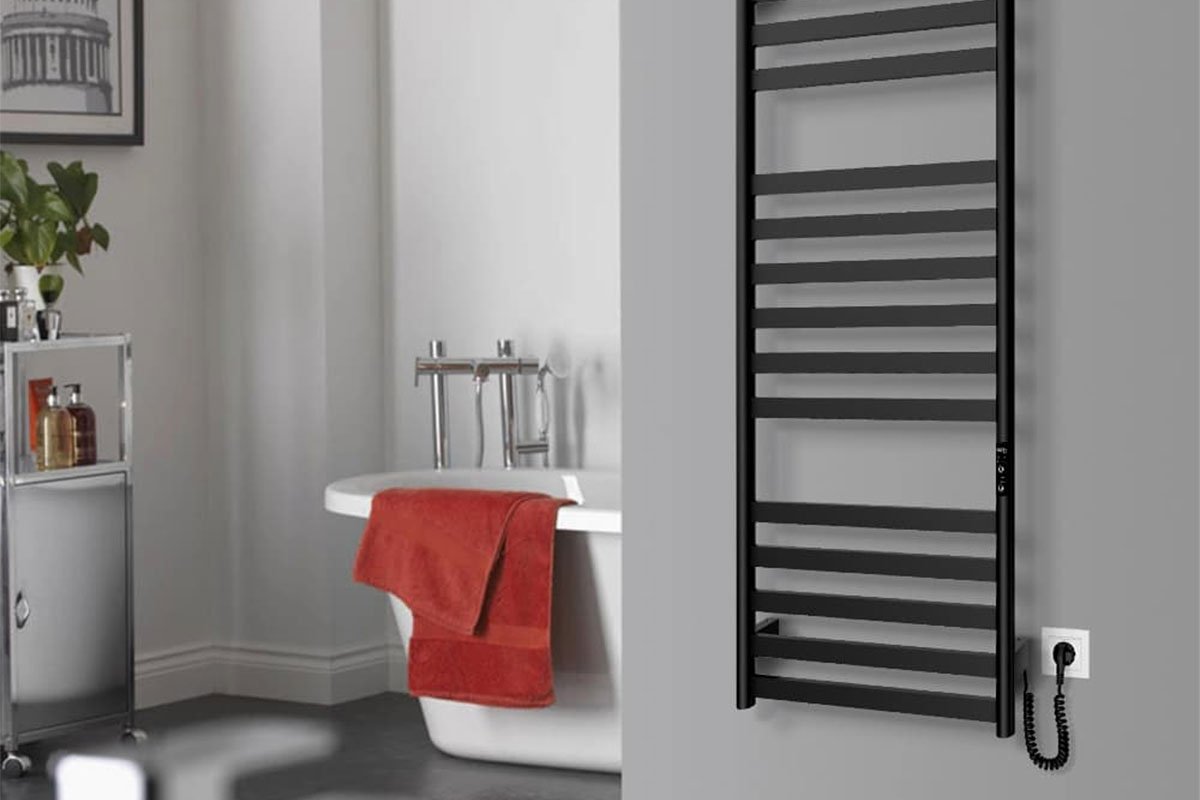
Electric heated towel rails offer numerous advantages over traditional heating systems. However, even they can suffer from rust that occurs due to prolonged exposure to water and moisture. To prevent this, it is essential to understand the product features and materials that guarantee the product’s durability, what is the electrical corrosion of heated towel rails, and what to do if corrosion occurs.
Why Does a Heated Towel Rail Rust
Ordinary rust affects devices that do not have a protective anti-corrosion coating or have poor-quality welds. Lack of ventilation and constant condensation also provoke the appearance of corrosion. The main causes of metal destruction are as follows:
- Contact with moisture – triggers a chemical reaction that leads to oxidation.
- Damage or lack of coating – unprotected metal instantly reacts with oxygen.
- Water quality – high content of salts, chlorine, and impurities accelerates material degradation.
- Low quality of metal – using ordinary steel instead of specialized alloys makes the device vulnerable.
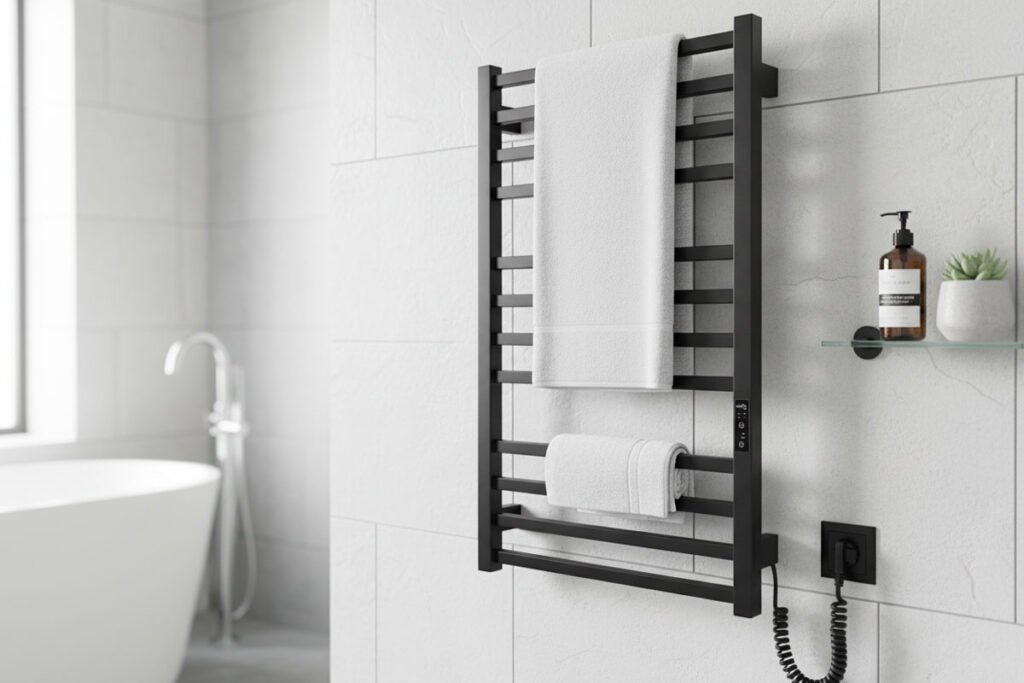
Choosing a quality Hygge Family electric dryer and maintaining proper ventilation in the bathroom solves this issue. Our devices are made of high-strength carbon steel with a special anti-corrosion coating, which guarantees their durability.
Signs of Electrocorrosion
The main cause of electrocorrosion is stray currents. They appear due to high electrical resistance, poor-quality installation, lack of grounding, or sudden voltage surges in the network. If an electric towel warmer rusts without visible external causes or the influence of a humid microclimate, this is a sign of electrocorrosion. The main symptoms of the problem:
- Damages on the metal surface are not continuous, but point-like.
- Signs of corrosion appear in the absence of contact with moisture.
- Destruction of welds.
- Slight electric shocks appear if you touch the device’s body.
Stray current is an anomalous phenomenon in which electricity goes beyond the intended circuit due to insulation failure. When such a current passes through metal, it is destroyed at the molecular level. The process can be accelerated by a galvanic reaction, when a pair of dissimilar metals cannot withstand the load. It leads to local destruction of the material.
Electrocorrosion and Rust: What Is the Difference
Electrocorrosion occurs in the presence of stray currents that flow along paths not provided for by the electrical circuit. The difference between electrocorrosion and ordinary rust is that it appears mainly at discharge points and is a dynamic phenomenon. Other main differences:
- Cause of occurrence. Rust is a natural oxidation of metal caused by the influence of moisture and oxygen. Electrocorrosion occurs under the influence of an electric current.
- Nature of surface damage. Rust spreads evenly over the entire area. Electrocorrosion acts locally, creating serious damage.
- Rate of destruction. If rust gradually spoils the metal over a long period, then the current causes critical damage quite quickly – sometimes in a matter of weeks.
The dependence on conditions also varies. External factors (dampness, condensation) are required for rust to appear. Electrocorrosion occurs due to grounding defects, galvanic pairs, or insulation failures, even if the room is dry.
How to Check for Stray Currents
Electrocorrosion of a heated towel rail can be dangerous for equipment and people and requires professional inspection. The control is carried out with a multimeter, measuring the values of alternating and direct voltage between the device case and the grounding bus. If the system is working correctly, the indicator should approach 0 V. The detection of even a small but stable voltage indicates the presence of a current leak.
The grounding conductor also requires a thorough inspection. If high electrical resistance is detected, the risk of electrocorrosion increases significantly.
Checking for the presence of stray currents and leaks is carried out only when the device is completely disconnected from the mains. It is advisable to use the services of a qualified specialist who has experience and knows the requirements of electrical safety.
How to Avoid Electrocorrosion of a Heated Towel Rail
The main condition for safe and long-term operation is the purchase of a device made of proven materials with an official guarantee. To reliably protect the equipment during operation, it is necessary to make a correct grounding. Involve a qualified specialist in this work, who will provide the proper level of protection against current leaks.
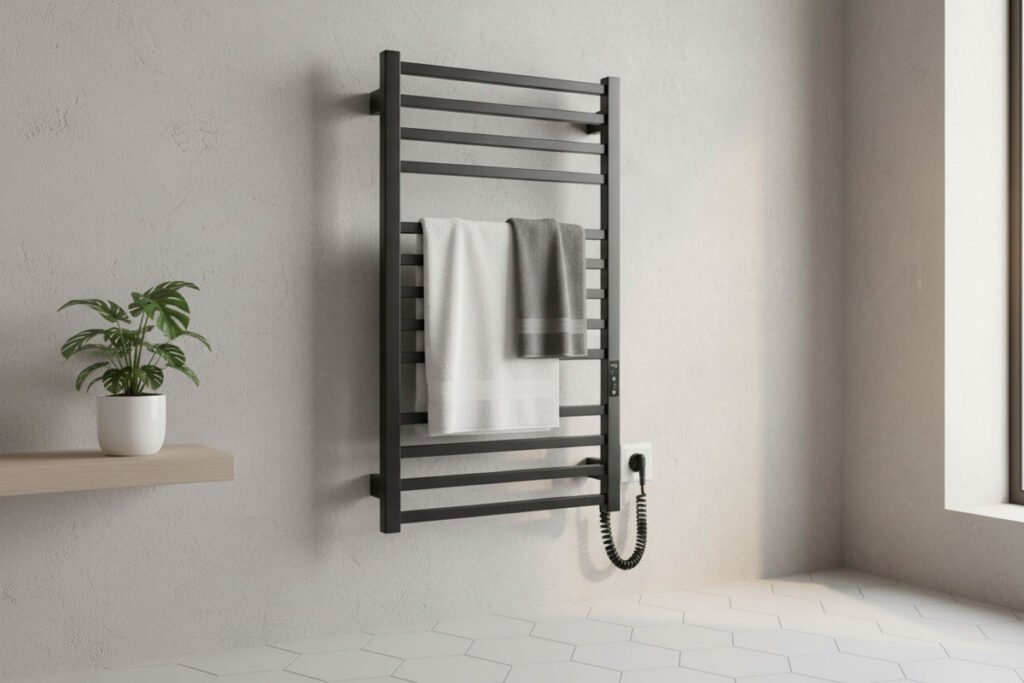
Inspect the condition of the surface of the device from time to time. Scratches, chips in the protective coating, or damage to the cable insulation need to be repaired immediately, as they are the “entrance gates” for corrosion processes.
Electric Towel Warmer Rusts – What to Do
First, you need to determine why the electric towel warmer rusts: due to external moisture or internal electrocorrosion. After diagnostics, eliminate the source of negative influence and ensure ventilation in the bathroom.
If the rust is insignificant, you can remove it yourself, but without using coarse abrasives so as not to cause a “breakdown” of the protective layer. After cleaning, treat the surface with a special anti-corrosion agent.
If the rust appears due to stray currents, ordinary cleaning will not help. You need to check the device’s grounding.
The best solution for long-term operation is Hygge Family towel warmers, manufactured according to European standards. They have a special coating with an IP44 degree of protection and an internal cable with heat-accumulating layers. This ensures even heat distribution, precise temperature control, and resistance to aggressive factors.